Most air tents operate at a much lower pressure than a SUP, but they still need a pump that can move a large volume of air and stop accurately at the required pressure. The correct setting is not the highest pressure your pump can reach. It is the pressure specified by the tent manufacturer.
Many air-tent systems use approximately 7–9 PSI, depending on the beam design, valve and manufacturer. Always check the label beside the valve or the tent manual before inflation.
Why the correct air-tent pressure matters
Too little pressure can leave the air beams soft and reduce the tent’s stability. Too much pressure can place unnecessary stress on the inner bladder, seams and valves, especially when the air inside warms in direct sunlight.
A pump with a digital pressure display and automatic shut-off makes the process easier. Set the required pressure, start inflation and let the pump stop when the target is reached. You should still stay beside the tent and check that each beam rises normally.
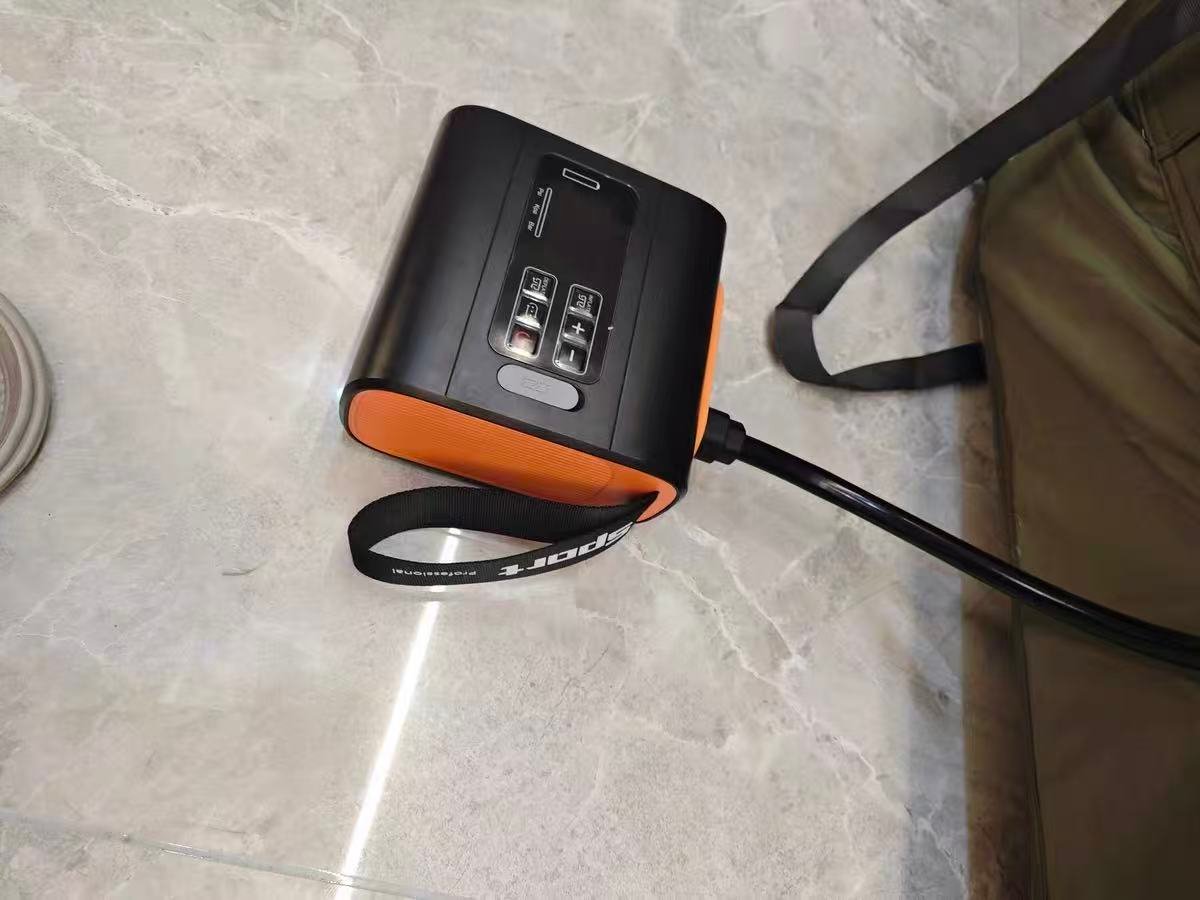
Air tent PSI is not the same for every tent
There is no single pressure that is correct for every inflatable tent. Some compact tents use a lower setting, while larger family tents may require a higher working pressure. A pump rated to 7 PSI may be enough for one tent but unsuitable for another that requires 8 or 9 PSI.
Before choosing a pump, confirm four details:
- The recommended working pressure shown in the tent manual
- The maximum pressure allowed for the air beam
- The valve type and the adapter required
- The number and size of air beams you need to inflate
Choose both pressure and airflow
PSI tells you the maximum pressure capability, but it does not tell you how quickly the pump can fill a large tent. Air tents contain much more air than bicycle tires, so a high-flow first stage is important.
A practical electric air-tent pump should combine:
- High airflow for the first part of inflation
- A high-pressure stage for reaching the final target
- A clear pressure display
- Adjustable pressure settings
- Automatic shut-off
- A secure hose and the correct valve adapter
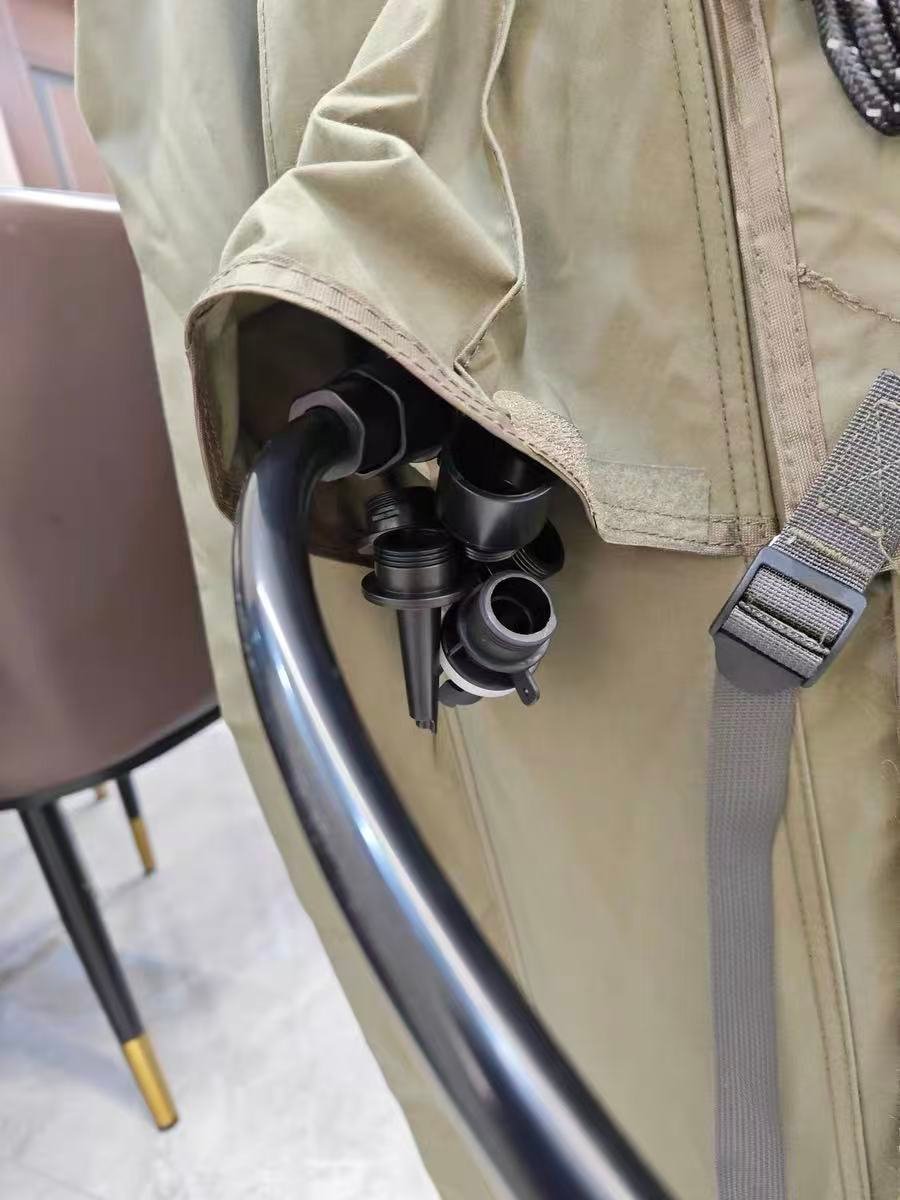
This is why a small tire inflator may show a very high PSI rating but still be frustratingly slow for a tent. It is designed to add pressure to a small air chamber, not to move the large volume of air needed by inflatable beams.
Can a 20 or 22 PSI pump be used for an air tent?
Yes, provided the pump allows you to set the tent’s required pressure and includes a compatible adapter. A maximum rating of 20 or 22 PSI only describes the pump’s capability. It does not mean the tent should be inflated to that pressure.
For example, the GR-133P 22 PSI rechargeable air-tent and SUP pump has an adjustable pressure setting and automatic stop. Its higher maximum pressure also allows one pump to cover both air tents and SUP boards, while the selected target pressure protects the tent from accidental over-inflation.
If you need a pump mainly for a large air tent, also consider battery runtime, hose length and the number of beams. A larger tent may require several inflation cycles, so choosing only by maximum PSI can lead to the wrong product.
How to inflate an air tent safely
- Spread the tent on a clear, level surface and close all deflation valves.
- Check the manufacturer’s pressure recommendation.
- Connect the correct adapter firmly to the inflation valve.
- Set the pump to the recommended PSI, not the pump’s maximum PSI.
- Start inflation and watch each beam rise without twisting.
- Stop immediately if the hose, valve or beam leaks or moves out of position.
- After pitching, recheck pressure if the temperature changes significantly.
What happens when the weather gets warmer?
Air expands as it warms. A tent inflated during a cool morning can become firmer in strong afternoon sun. If the beams feel excessively hard, follow the tent manufacturer’s instructions and release a small amount of air if required. Never exceed the maximum pressure printed on the tent or stated in its manual.
Which electric pump should you choose?
Start with the tent, not the pump. Confirm the required PSI, valve and tent size, then choose a model that can meet all three requirements.
If you want one rechargeable pump for both an air tent and a SUP, a two-stage 20–22 PSI model is usually the more flexible choice. If you only inflate lower-pressure camping mattresses, pool floats or small inflatables, a compact high-flow pump may be lighter and more economical.
See our electric air-tent pumps, or use Find Your Pump to compare products by application and pressure.
Frequently asked questions
What PSI should I set for my air tent?
Use the pressure printed beside the valve or specified in the tent manual. Many models fall within roughly 7–9 PSI, but the correct setting varies by manufacturer and design.
Can I use a SUP pump for an air tent?
Yes, if the pump has an adjustable target pressure, automatic shut-off and the correct valve adapter. Set it to the tent’s required pressure rather than the SUP pressure.
Can I use a tire inflator?
A tire inflator may reach high pressure, but its airflow is usually too low for large air beams. A two-stage pump designed for tents or SUPs will normally inflate a tent more efficiently.
Should I leave the electric pump unattended?
It depends on the pump. If the pump does not have a pressure display and automatic shut-off, you should stay beside it and monitor the inflation process at all times.
With a pump such as the GR-133P, the hose can be securely screwed directly onto the tent valve, so you do not need to hold it by hand. Set the target pressure—for example, 7 PSI—and start the pump. It will inflate the tent automatically and stop when the selected pressure is reached. Even with automatic shut-off, check the hose and valve connection before walking away and remain nearby while the pump is operating.
How long does it take to inflate an air tent?
Inflation time depends mainly on the size of the tent and the airflow of the pump. With the GR-133P, a tent of approximately 16 m² takes about 10 minutes to inflate, while an 8 m² tent takes approximately 3–4 minutes. Actual inflation time may vary depending on the tent structure, number of air beams, target pressure and valve design.