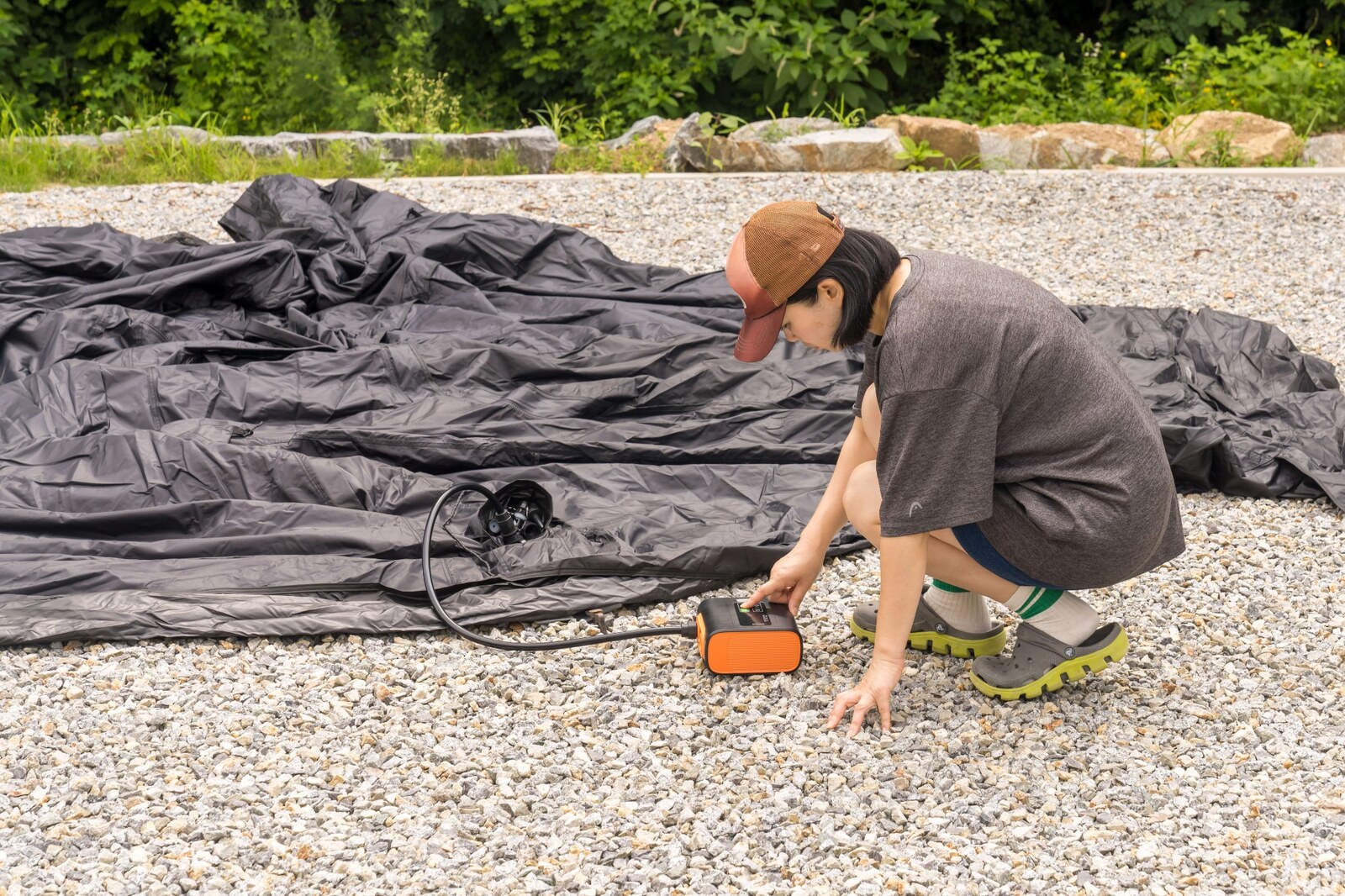
A practical guide for camping, air tents, paddle boards and inflatable boats.
Match the pressure requirement first, then compare airflow at relevant operating conditions. Pressure determines whether a pump can reach the required inflation level; airflow helps determine how quickly it moves air. Neither number alone tells you whether a pump is right for your gear.
What does PSI tell you?
PSI means pounds per square inch, a unit of pressure. A pump’s maximum pressure is its capability limit, not an instruction to inflate every item to that level. Use the pressure specified by the inflatable’s manufacturer and make sure the pump is suitable for controlling inflation at that pressure.
What does airflow tell you?
Airflow describes the volume of air moved per unit of time, often shown in litres per minute (L/min). A large, low-pressure inflatable needs a substantial volume of air. However, an airflow rating without test conditions is not a complete speed comparison: free-air output and output against pressure are different measurements.
Why the biggest number is not always the best choice
A compact tire inflator may reach a high pressure but still be a poor match for filling a large inflatable. A high-volume camping pump may fill a compatible sleeping pad conveniently but may not achieve the working pressure required by a SUP. Some pumps use different stages for filling and pressurizing; check the specifications of the particular model.
Start with your application
| Your gear | What to check |
|---|---|
| Camping pad or air mattress | Required pressure, valve fit, portability and inflation/deflation functions. |
| Air tent | The tent’s specified working pressure, compatible connection and suitable pressure control. |
| SUP board | The board’s recommended pressure, valve adapter and performance near the target pressure. |
| Inflatable boat | Separate requirements for the floor and each chamber, plus the manufacturer’s inflation sequence. |
Do not assign a pressure based only on the category name. Follow the manual for your exact inflatable.
How to compare inflation-time claims
For a useful comparison, use the same inflatable, starting condition and target pressure. Record the pump model, power source or battery state, ambient conditions and test procedure. A quoted time for one board or tent does not establish the time for every inflatable.
A simple buying checklist
- Find the required pressure in your inflatable’s manual.
- Check the valve and the correct adapter.
- Choose a suitable power source for where you will use it.
- Compare airflow and inflation-time results under matching conditions.
- Check operating limits, cooling instructions and deflation support.
Common questions
Does higher PSI mean faster inflation?
No. Maximum pressure and inflation speed describe different aspects of pump performance. Look for a relevant inflation test, not just the highest pressure rating.
Can one pump cover several applications?
Sometimes, if its pressure range, controls and adapters match each item. Check compatibility for each inflatable rather than assuming a multi-use label covers everything.
Should I set the pump to its maximum pressure?
No. Use the inflatable manufacturer’s recommended setting and follow the instructions for both the pump and inflatable.
Need help matching a pump?
Tell us what you inflate, its specified pressure and its valve type.
Developing a product range? Discuss your application with us.
Further reading
For manufacturer guidance on matching a pump and following the recommended pressure, see Outwell’s air-tent guidance. Always consult the manual supplied with your own gear.